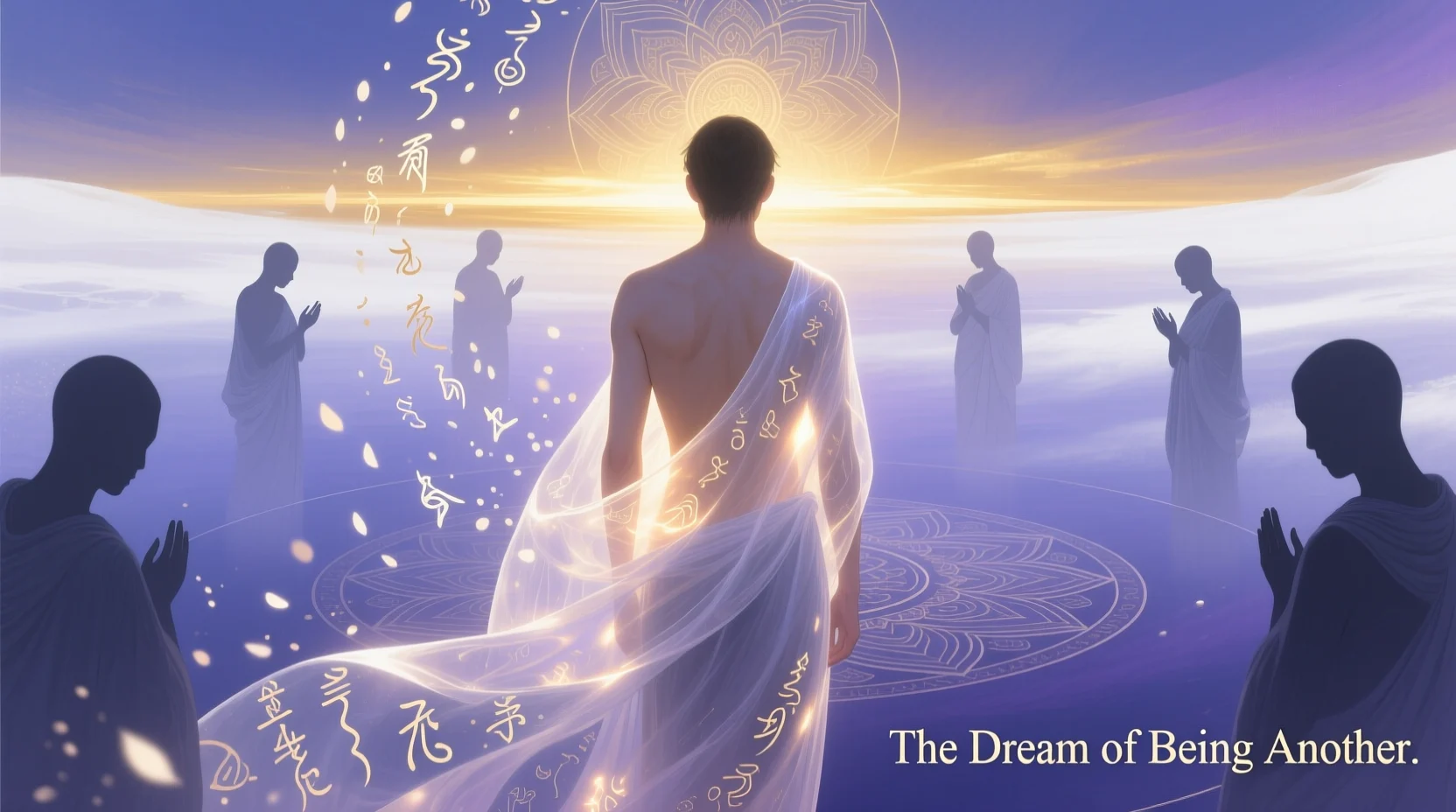
It began on a quiet night: you dreamed of a friend, or someone you know, standing there—clothed, but only half-dressed. Their attire was incomplete, their figure exposed in part—and as you watched, a strange mix of curiosity and discomfort settled in. You woke up with a flutter: What was that about? Why a person you know, why half-clothed rather than fully naked or fully dressed?
In the liminal space between full dress and full undress lies rich symbolism. Dreams of someone else being half-dressed often hold multiple layers of meaning: vulnerability, incomplete protection, partial truth, hidden aspects of self or other, spiritual exposure. This is not simply about the person in your dream—it’s about what that person represents in your psyche, your relationships, and your spiritual journey.
In this article, we’ll explore the phenomenon of dreaming of someone else being half-dressed—from its historical and cultural roots, to psychological and healing interpretations, to spiritual and religious perspectives. We’ll dig into deeper symbolism (strength, resilience, inner healing), gender-based differences in meaning, body placement & visibility, design & colour symbolism, cultural sensitivity, real-life stories, and a practical FAQ to bring clarity to your experience.
🏛️ Historical & Anthropological Background
Ancient Roots of Clothing & Exposure
Clothing across cultures has long symbolised more than just covering the body—it has represented identity, status, protection, authority, and spiritual covering. In many ancient societies:
- Being clothed appropriately indicated one’s social role, spiritual state or moral standing.
- Partial exposure or being inadequately dressed often correlated with shame, vulnerability, spiritual “lack”, or transition.
- Myths frequently show figures partially dressed or in limbo attire, representing transitional states: death to rebirth, innocence to knowledge, hidden truths coming into light.
Cultural Context & Spread
- In Indigenous traditions, garments and coverings often represented spiritual protection. The removal or absence of covering meant exposure to spiritual forces, vulnerability, or passage into a new identity.
- In Eastern cultures, partial dress in dreams or ceremonies might signal incomplete transformation or the journey from ignorance to enlightenment.
- Modern dream interpretation frameworks emerged in Europe and the Americas, where dreams of half clothing or nudity were studied as symbols of identity, social anxiety, fear of exposure.
Thus, dreaming of someone else half-dressed draws on a long anthropological archive: the body as symbol, clothing as protection or identity, exposure as vulnerability or truth-telling.
🧠 Psychological & Healing Interpretations
Jungian and Modern Psychology Views
Carl Jung taught that the body and its coverings in dreams represent the “persona” and what lies beneath it. In this view:
- The person in your dream might represent a part of you or someone you project onto.
- Their being half-dressed suggests that part of that self or other is visible, but part is hidden or inadequate.
- This might indicate fear of being seen or not seen, fear of vulnerability, or aspect of self that is emerging but not yet fully formed.
Modern cognitive/gestalt dream analyses point out:
- Clothing (or lack of it) often reflects preparedness for situations. Someone else half-dressed may reflect your sense that they—or you—are unprepared, partly exposed.
- The emotional tone matters: Are you embarrassed? Concerned? Calm? That feeling gives the best clue to meaning.
Healing Potentials
Dreams of someone else being half-dressed can be healing signals:
- They bring awareness to relationships or parts of yourself that are partially hidden or not fully supported.
- They invite you to notice vulnerability—in yourself or in others—and respond with compassion or action.
- They may also indicate transition phases: neither fully dressed (old state) nor fully changed (new state). The half-dress reflects liminality—you’re in between. Acknowledging this can help healing momentum.
Key Interpretive Touchpoints
- The other person: Who are they? What do they represent to you?
- Their attire: Half-dressed implies not fully covered / not fully prepared.
- Your reaction: Concern, shame, empathy, neutrality?
- Setting & context: Public, private, familiar, strange?
- Presence of others: Are you witnessing alone, with them, or watching them?
✨ Spiritual & Religious Perspectives
Spiritual Symbolism
Spiritually, clothing and exposure in dreams carry deep significance:
- Covering often means divine protection, spiritual identity, or favor.
- Exposure can indicate loss of that cover, spiritual vulnerability, or revealed truth.
- Someone else being half-dressed in your dream might mean: You are witnessing someone’s spiritual state—a friend, family member or an aspect of yourself that needs more covering (support, prayer, protection). According to some Christian dream interpreters, these dreams can be warnings or calls to action: “Go and cover them,” “Pray for them,” “Restore their protection.”
Cross-Cultural & Modern Spirituality
- Some Indigenous teachings say that when one sees another’s partial dress in a vision or dream, it signals that they are in a transitional or vulnerable state. You’re being asked to hold space for them, act as witness or guide.
- In New-Age or metaphysical schools, half-dressing in dreams can symbolise unfinished spiritual work—someone or some part of you is emerging but has not yet completed its process.
- In Christian interpretation, the dream may call you to pray for covering (spiritual armour) over others and yourself.
Positive vs Warning
- The dream is not always negative: a person half-dressed can signify someone stepping out from old covering into new, catching them in mid-transition.
- But it often signals awareness—about lack of protection, incomplete identity, spiritual exposure.
🌿 Deeper Symbolism: Strength, Resilience, Protection & Inner Healing
Strength & Resilience
- Even half-clothed, the person stands. They may represent resilience—moving forward even when not fully equipped.
- The dream invites you to recognise strength in vulnerability: someone (or you) standing half-dressed yet still present suggests inner strength despite exposure.
Protection & Covering
- Clothing = protection in dream-language. Half-dress = partial protection.
- The dream may reveal that someone (or you) lacks full protection—spiritually, emotionally, or relationally.
Inner Healing
- Perhaps you’re witnessing a wounded part of yourself—or someone you know—that needs acknowledging, covering, healing.
- The dream may prompt: What covering do I need? What covering can I give?
- Healing begins with witnessing, empathy, and understanding you don’t have to be fully “dressed” to be present. You can grow into full attire.
Transition & Renewal
- Half-dressed status suggests you are in-between—not the old state, not yet the new. Recognising this space can be powerful: it’s the threshold of change.
- The dream encourages you to honour the threshold rather than rush through it.
🚹🚺 Gender-Based Meanings: Masculine vs Feminine Interpretations
Masculine Interpretations
- A man dreaming of someone else half-dressed might be observing his own sense of leadership or protection being incomplete.
- It can reflect concerns about vulnerability in relationships, fear of failure or not being “fully equipped” to protect, provide or support.
- The other person may represent the man’s inner feminine side, or a real female person (friend, partner) whose half-dressed state signals needing help.
Feminine Interpretations
- For a woman, dreaming of someone else (male or female) half-dressed may highlight nurturing instincts, empathy, awareness that someone in her life lacks full protection or covering.
- It may also reflect her own internal state: “I feel I’m in between coverings—neither supported fully nor fully independent.”
- The external person in the dream can symbolise aspects of her self-identity or spiritual self that remain half revealed.
Shared Themes
- Both genders: The dream might show you in a helper–witness role: you see someone exposed and you respond. It invites compassion, action, presence.
- Key question: Are you the one half-dressed, or is someone else in that state? That matters: if someone else, maybe you’re witnessing their need (or projecting your need).
👣 Placement & Body Location Meanings (for the other person)
Where the person is half-dressed—and which body region is exposed—adds nuance:
- Torso / Chest area exposed → emotional vulnerability, matters of the heart, hidden feelings.
- Back or shoulders uncovered → lack of support, feeling “bare-backed”, exposed to burdens or attacks behind you.
- Legs / lower body exposed → shaky foundations, movement or progression impeded, feeling unstable.
- Hands/arms not properly covered → actions, working life, ability to lift/carry. Someone half-dressed there suggests their “work” or personal power is vulnerable.
- Head or neck uncovered → identity, voice, spiritual connection. Someone else in this state may signify that their identity or spiritual covering is incomplete.
When you recall your dream, note which part of the body was uncovered—it reveals where the vulnerability lies.
🎨 Design & Color Symbolism in Dreams of Partial Dress
Colours and designs of clothing or lack thereof can deepen meaning. Consider:
- Blue: Peace, spiritual calm. A half-dressed person in blue may reflect someone needing solace or healing.
- Red: Passion, power, danger. If the attire is red and half missing, it could mean someone’s strength is exposed or misused.
- White: Purity, protection. Half dressed in white might suggest incomplete innocence or incomplete spiritual covering.
- Black: Mystery, hidden aspects, grief. A person with dark outfit but half missing may reflect hidden pain or unexpressed grief.
- Green: Growth, renewal. Someone half-dressed in green may be in the process of transformation, needing time to “grow into” full covering.
- Gold/Silver accents: Honour, divine favour. If missing parts of their attire are gold-coloured, maybe their favour or integrity feels stripped or incomplete.
- Torn or shabby clothing: The design (or lack of design) matters. Torn attire signals damaged identity or relationships.
Remember: What kind of clothing? What colour? What context? These visual clues sharpen your interpretation.
⚖️ Cultural Debate: Respect vs. Appropriation
Dream interpretation of clothing and exposure crosses into cultures where dress, covering and modesty hold deep significance. Important considerations:
- In many Indigenous and tribal cultures, covering is sacred—partial exposure could represent real spiritual transition or loss. Interpreting such dreams without cultural sensitivity risks mis-appropriation.
- Christian or Western frameworks interpret half-dress through spiritual covering and armour metaphors. But translating Indigenous meanings (for example, hair and clothing symbolism) into generic “lack of covering = vulnerability” may erase original cultural nuance.
- A respectful approach: Reflect on your own culture/heritage. Ask: What does covering mean in my tradition? How do I personally feel about exposure? Use dream symbolism as personal, not universal.
- Honour the original meanings of clothing traditions; avoid glib use of “someone half-dressed means spiritual war” without understanding background.
📖 Real-Life Stories & Examples
Story 1: The Witness’s Dream
Rebecca—an early-morning volunteer at her church—dreamed of a co-worker standing in the foyer of their church building, half wearing a robe—the bottom half of his body clad, the top half bare from the waist up. She felt uneasy. When she woke, she realized this man was struggling spiritually and had stopped attending prayer sessions. The dream moved Rebecca to gently approach him. The man later acknowledged he felt “exposed” and abandoned spiritually. They prayed together, and his attendance returned. The dream was Rebecca’s invitation to see, care, respond.
Story 2: A Partner’s Reflection
Mark dreamed of his partner standing at their kitchen door, her dress hanging loose on one side, exposing part of her chest and shoulder. He felt vulnerability, concern. In waking life, he realised his partner felt not fully supported in the relationship and had started hiding parts of her emotional pain. The dream served as a wake-up call: Mark needed to listen more deeply. The pair entered couple’s counseling and found deeper connection. The half-dressed image was not blame—it was signal.
Story 3: Inner Self as Other
A young woman, Laila, had a dream of a stranger (male) half-dressed in a tattered tunic, standing on a shore. After reflecting, she realised the man symbolised her own inner masculine energy—her drive and ambition—feeling exposed and under-equipped at her new job. The dream allowed her to integrate that part of herself—giving it “clothing” (support, skill training, affirmation) in waking life. Over time she felt stronger and more whole.
These examples show: someone else being half-dressed in a dream often points to someone you know, or an aspect of you needing covering, support, recognition.
❓ FAQs
Q1. Does dreaming of someone else half-dressed mean they are in trouble?
Not always. It could mean you perceive them as vulnerable, or you are witnessing someone’s journey. It could also reflect your own part of self projected onto them.
Q2. Does the gender of the other person matter?
Yes, it can add nuance. A male figure might highlight your masculine/instrumental energy; a female figure your nurturing/emotional side. But the core meaning remains: incompletion, exposure, transition.
Q3. What should I do after such a dream?
Reflect:
- Who was the person?
- What part of them was exposed?
- What were your feelings?
Journal your dream. Consider how you might support them (or yourself) in waking life. Seek healing, covering, or transformation.
Q4. Could this dream mean a spiritual attack or negative force?
Potentially—but not always. It might mean lack of spiritual “covering” or protection, but it could just as well signify a new phase where something is emerging, not yet fully clothed. Use prayer or meditation according to your tradition, and focus on restoration.
Q5. Does color and clothing style matter?
Absolutely. Color indicates mood/spiritual state (e.g., blue = peace, red = vigor, black = hidden grief). Clothing style (torn, formal, casual) adds another layer of meaning about how “dressed” the person is—even if only half.
🎯 Conclusion: Witnessing the Un-Finished and Offering Covering
Dreams of someone else being half-dressed call us to see what is partially hidden, to be aware of what is in transition, and to offer covering—in our relationships, in our inner lives, or in our spiritual walk.
This is not simply about shame or exposure—it is about in-between states, growth phases, vulnerable strength. The person in the dream might be a friend, partner, colleague—or a mirror of your own yet-to-be-clothed self.
Take heart: Being half-dressed doesn’t mean you’re defeated. It means you are emerging. It means you are being seen, you are being invited into fullness. Use your waking life to wrap support, compassion, covering around the unfinished parts. Engage in healing—whether emotional, relational or spiritual. Step with faith into the state of being more fully clothed—in spirit, in identity, in purpose.