You wake up breathless.
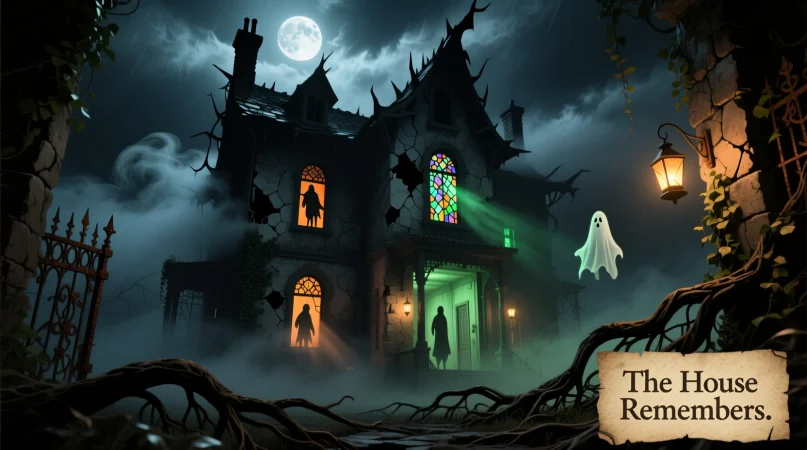
You were just wandering through a dim hallway — creaking floors, flickering lights, distant whispers. A haunted house rose around you like a memory you forgot you had. Every room carried a presence. Something old, something unfinished, something waiting.
Why does this dream keep happening? Why are you walking through a haunted house at night, inside your own mind?
Haunted house dreams are among the most psychologically layered, emotionally revealing, and symbolically charged dreams a person can experience. Far from being simple nightmares, they are messages from the past, signals of emotional burden, and invitations to confront what you avoid.
This article dives deep into history, anthropology, psychology, spirituality, trauma, symbolism, color meanings, gender dynamics, and more — helping you decode why this house appears in your dreams and what it wants you to understand.
📜 Historical & Anthropological Background
🏚️ Ancient Symbolism of Abandoned or Haunted Houses
Haunted houses are not a modern concept. Civilizations across the world recognized the house as a symbol of the self, the family, and the lineage.
- Ancient Roman Beliefs: Romans believed spirits of the dead (manes) could linger around neglected homes, symbolizing “unsettled matters of the past.”
- Chinese Tradition: Empty or abandoned houses were considered vessels for residual yin energy, often representing suppressed emotions or forgotten ancestors.
- Celtic Folklore: Ruins and deserted homes were portals between worlds — places where memory, spirit, and time intertwined.
- African Traditions: Many African cultures saw abandoned houses as places where ancestral energy gathers, especially when a family line carries unresolved conflict.
Anthropologically, the haunted house represents collective fear of the forgotten and the unknown — a metaphor for human memory and unfinished business.
🧠 Psychological & Healing Interpretations
🧩 Haunted Houses Through Jungian Psychology
In Carl Jung’s symbolism, the house is a blueprint of the human psyche. Each room represents a layer of the self:
- Attic: thoughts, memories, intellect
- Basement: repression, fear, trauma
- Hidden Rooms: unknown or neglected parts of your personality
- Dark Hallways: uncertainty, confusion
- Broken Doors/Windows: boundary issues
When the house becomes haunted, Jung would interpret it as:
- unresolved trauma
- shadow aspects of the personality
- anxiety or emotional “ghosts”
- buried memories resurfacing
In short, you are not dreaming of a haunted house —
👉 You are dreaming of the haunted parts of yourself.
🩹 Modern Psychological Interpretation
Therapists often associate haunted house dreams with:
- childhood memories resurfacing
- post-traumatic stress
- relationship wounds
- fear of the unknown
- avoidance patterns
- inner child seeking attention
It can also appear during:
- major life transitions
- emotional overwhelm
- disconnection from self
- periods of deep healing
Haunted house dreams are not warnings —
They are invitations to heal.
🌌 Spiritual & Religious Perspectives
🪶 Native & Indigenous Symbolism
In many Indigenous traditions, houses in dreams represent:
- ancestral energy
- generational stories
- inherited trauma
If the house is haunted, it may symbolize:
- ancestral wounds
- family patterns repeating
- emotional burdens passed down lines
☯️ Eastern Spirituality
In Hindu and Buddhist thought, a haunted house may represent karma, the residue of past experiences affecting your present.
It may signal:
- spiritual imbalance
- attachment to fears
- need for emotional cleansing
✝️ Christian Symbolism
Haunted houses may symbolize:
- spiritual warfare
- guilt or moral conflict
- repressed emotions
- the need for release and forgiveness
Across spiritual traditions, the haunted house represents the shadow side of the soul — the part we must enter to evolve.
🔮 Deeper Symbolism: Shadows, Memory & Emotional Echoes
Different elements of the haunted house hold specific meanings:
| Dream Symbol | Meaning |
|---|---|
| 👣 Wandering Through Dark Rooms | Searching for lost parts of yourself |
| 🚪 Locked Doors | Secrets, trauma, boundaries, avoided truths |
| 🪞 Broken Mirrors | Identity issues, self-conflict |
| 📦 Hidden Rooms | Untapped potential or repressed memories |
| 👻 Seeing Ghosts | Emotional echoes of your past |
| 🔦 Finding Light in the House | Clarity, healing, newfound strength |
| 🕰️ Old Furniture & Dust | Memories that haven’t been processed |
| 🕳️ Basement Scenes | Deepest fears or childhood wounds |
Haunted houses are not about horror —
They are about memory, emotion, identity, and healing.
⚖️ Gender-Based Meanings
👩 Haunted House Dream Meaning for Women
When women dream of a haunted house, it often reflects:
- suppressed emotional expression
- unresolved wounds from relationships
- inner child healing
- fear of repeating past patterns
- intuition calling for attention
Women’s dreams often feature:
- locked bedrooms → protecting emotional space
- broken windows → vulnerability
- ghostly figures → past relationships haunting the present
👨 Haunted House Dream Meaning for Men
For men, the haunted house often points to:
- emotional avoidance
- pressure to appear strong
- guilt or past mistakes
- suppressed fears
- masculine identity conflict
Men often dream of:
- dark hallways → uncertainty about direction
- aggressive spirits → internalized anger
- collapsing houses → pressure, burnout, responsibility fears
The house reflects how each gender experiences emotional burden and vulnerability differently.
🏚️ Placement & Body Location Meanings (Tattoo Perspective)
If someone chooses a haunted house tattoo, its meaning deepens based on placement:
| Placement | Symbolism |
|---|---|
| ✋ Hand/Wrist | Confronting fear openly, embracing shadow self |
| 💪 Arm/Shoulder | Strength born from trauma or past battles |
| 🔥 Chest | Emotional wounds, inner battles, intense memories |
| 🦵 Thigh | Hidden fears, private struggles |
| 🔙 Back | Past trauma carried through life |
| 🧠 Neck/Ear Area | Sensitivity, intuition, fear of being overwhelmed |
A haunted house tattoo often symbolizes:
survival, resilience, transformation, and rebirth.
🎨 Design & Color Symbolism
Colors and styles make the symbolism richer:
| Design / Color | Meaning |
|---|---|
| 🖤 Black Haunted House | Deep fears, trauma, shadow work |
| 🔥 Red Accents | Emotional intensity, danger, unresolved anger |
| 💙 Blue Tones | Emotional clarity, healing, spiritual confrontation |
| 🌫️ Grey Foggy Style | Confusion, memory, subconscious mystery |
| 🌈 Neon or Surreal Art | Dream worlds, altered consciousness, awakening |
| 🕸️ Gothic Style | Ancestral weight, old wounds |
| ✨ Fantasy Haunted House | Transformation, rebirth, mystical journey |
Each artistic choice mirrors the dreamer’s internal state.
🪶 Cultural Debate: Respect vs. Appropriation
Haunted houses are part of:
- Indigenous beliefs
- Asian ancestral traditions
- Celtic folklore
- African lineage culture
When used in art or symbolism:
- Avoid copying sacred symbols (ancestral patterns, cultural ghost myths) without understanding them
- Respect the cultural roots of haunted house imagery
- Recognize that “haunting” often refers to history, pain, or ancestral trauma
Mindful use brings honor rather than distortion.
🌠 Real Stories & Interpretations
🏚️ Sarah’s Reoccurring Dream of a Crumbling House
Sarah kept dreaming of a house collapsing around her.
Therapy revealed she was carrying the weight of her broken marriage.
The house was a metaphor for her emotional foundation falling apart — a call to rebuild her life.
👁️ Ahmed’s Dream of Ghosts in Locked Rooms
Ahmed saw locked rooms filled with shadows.
It represented childhood trauma and his habit of shutting away memories he wasn’t ready to face.
As he healed, the dream shifted — the doors began opening.
🌫️ Maya’s Dream of Wandering a Foggy Mansion
Feeling lost in life, Maya dreamt of an enormous haunted mansion.
Each room symbolized a part of herself she hadn’t discovered yet.
The dream helped her embrace her identity journey.
Haunted houses reveal the story of your emotional architecture.
❓ FAQs
1. Why do I keep dreaming of the same haunted house?
It means you’re avoiding a recurring emotional issue or memory that needs attention.
2. What does it mean if ghosts chase me?
You’re running from something unresolved — fear, guilt, or past trauma.
3. What if the haunted house is my childhood home?
This often symbolizes inner child wounds, family trauma, or early memories resurfacing.
4. Are haunted house dreams bad signs?
No — they’re invitations to heal, not warnings of danger.
5. How can I stop haunted house nightmares?
By addressing suppressed emotions, journaling, therapy, shadow work, or emotional processing.
🌄 Conclusion: The House Within You Wants To Be Seen
The haunted house is not an external threat —
It is a reflection of your inner world.
Its walls hold:
- your unspoken fears
- your buried memories
- your unfinished emotional stories
Walking through it, even in a dream, is an act of courage.
Every room you enter is a step toward healing.
Every shadow you face becomes light.
The message is clear:
You cannot heal what you don’t explore — but you are strong enough to explore what haunts you.