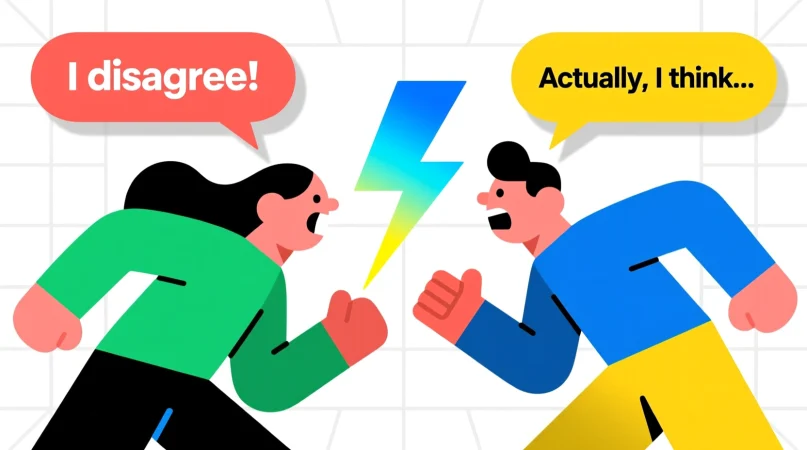
You’ve probably seen someone comment “This is controversial” under a TikTok, YouTube video, or Twitter post and wondered what exactly makes something “controversial.” I remember scrolling through a viral clip where everyone in the comments kept calling it controversial — but nobody explained why. It made me curious, and if you’ve felt that same confusion, you’re in the right place.
Quick Answer:
“Controversial” means something that causes disagreement, debate, or mixed opinions. It often involves sensitive, bold, or hot-topic subjects that people don’t easily agree on.
What Does “Controversial” Mean in Text?
In texting or social media, “controversial” is used to describe a topic, opinion, or action that sparks arguments, strong reactions, or divided opinions. It doesn’t have to be offensive — it simply means people strongly disagree about it.
Example:
“that’s a controversial take but i get your point 😬”
In short:
Controversial = Debate-worthy = Something people disagree on.
Where Is “Controversial” Commonly Used?
You’ll often see people use “controversial” in places where debates and opinions spread fast:
- 🧵 Twitter / X discussions
- 🎥 TikTok comment sections
- 💬 YouTube debates
- 🤝 Classroom or group chats
- 🌍 News stories
- 🎮 Gaming communities
It’s suitable for casual, semi-formal, and discussion-based contexts, but not ideal for very formal writing unless the topic genuinely involves public disagreement.
Examples of “Controversial” in Conversation
A: “did you see that new dress design?”
B: “yeahhh kinda controversial 😭 ppl fighting in the comments”
A: “my opinion might be controversial but i like pineapple on pizza”
B: “nahhh you brave for saying that 😂”
A: “is this movie good??”
B: “controversial answer: i loved it 😭”
A: “why is everyone arguing here??”
B: “bc the topic’s super controversial rn 💀”
A: “she posted a controversial video again??”
B: “bro she loves chaos 😭”
When to Use and When Not to Use “Controversial”
✅ When to Use
- When a topic causes mixed reactions
- When people are debating or arguing
- To describe bold opinions
- In discussions, comments, or opinion-based chats
❌ When NOT to Use
- In professional reports (unless accurate)
- When the topic is not actually sensitive
- When speaking to someone who may misunderstand
- In conversations that require neutrality
Context Comparison Table
| Context | Example Phrase | Why It Works |
|---|---|---|
| Friend Chat | “that’s a controversial take tbh 😅” | Casual & honest |
| Work Chat | “This suggestion may be divisive.” | Professional & polite |
| “This proposal could lead to differing opinions.” | Formal & respectful |
Similar Slang Words or Alternatives
| Word / Slang | Meaning | When to Use |
|---|---|---|
| “Debatable” | Can be argued | Mild disagreements |
| “Hot take” | Bold, risky opinion | Social media discussions |
| “Polarizing” | Strongly divides people | Politics / fandoms |
| “Problematic” | Offensive or questionable | Sensitive topics |
| “Unpopular opinion” | Something most people dislike | Memes & casual chats |
FAQs
1. Does “controversial” mean something is bad?
Not necessarily. It simply means people disagree about it.
2. Can a harmless opinion be controversial?
Yes — even simple things like food choices can spark debates.
3. Is “controversial” rude?
No, but it can label a topic as sensitive or heated.
4. Is it okay to use “controversial” at work?
Only if discussing topics that genuinely involve differing views.
5. Why do people use “controversial” on TikTok?
Because it easily sums up a post that causes arguments in the comments.
6. Is controversial always political?
No — it can be about movies, fashion, food, or anything divisive.
7. Can someone be called controversial?
Yes. It means that person often expresses bold or debated opinions.
Conclusion
“Controversial” is one of those words that pops up everywhere — from social media to real-life conversations. It simply means something that sparks debate, whether it’s a harmless opinion or a serious topic. When used correctly, it helps describe situations where people feel strongly in different directions. Just remember: some topics require sensitivity, even if they’re controversial.