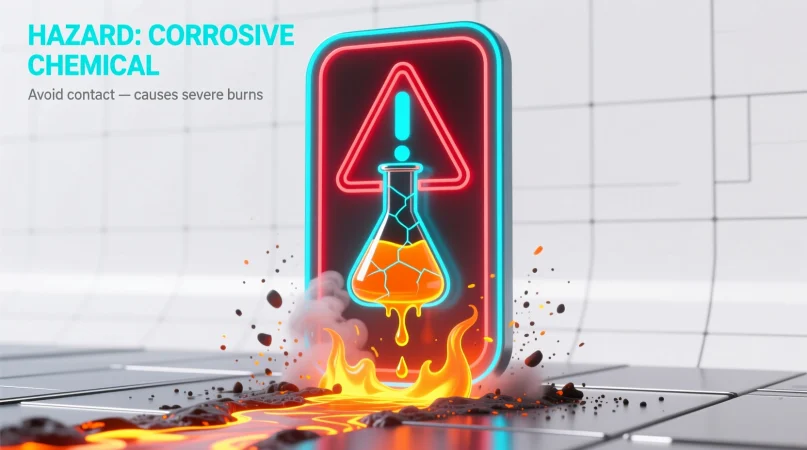
If you’ve ever spotted that little warning sign with a liquid dripping onto a hand and burning through it, you probably froze for a second—same here. I remember seeing it on a bottle in my school lab and thinking, “Is this thing going to melt through the table?!” The word corrosive sounds scary, and honestly, it is something to take seriously. But once you understand what it means, it becomes much easier to use and recognize safely.
Quick Answer:
“Corrosive” means a substance that can destroy, burn, or damage materials or living tissue through a chemical reaction. It’s a science and safety term, used to warn people about chemicals that can cause harm if not handled properly.
What Does “Corrosive” Mean?
The word “corrosive” describes any chemical or substance that can eat away, burn, or slowly destroy another material. This can include metals, skin, organic matter, plastics, and more.
It works through chemical reactions, often releasing heat, fumes, or causing surface breakdown.
Example:
“Be careful with that cleaner — it’s corrosive and can irritate your skin.”
In short:
Corrosive = Chemically damaging = Can burn or destroy materials.
Where Is the Word “Corrosive” Commonly Used?
You’ll see this word most often in areas connected to science, safety, and instructions, such as:
- 🧪 Chemical labels and warning signs
- 🏭 Industrial cleaning products
- 🧼 Toilet and drain cleaners
- 🔥 Battery acid instructions
- 🏫 Science labs and school experiments
- 🚛 Transport and storage guidelines for chemicals
- 📦 Packaging with safety icons
It is a formal and technical term, but also used in everyday language when warning someone about harsh products.
Examples of “Corrosive” in Conversation
A: “Can I use this on metal?”
B: “No bro, it’s corrosive. It’ll rust it fast.”
A: “Why gloves for this?”
B: “It’s corrosive, it can burn skin.”
A: “Is that battery leaking?”
B: “Yeah and battery acid is super corrosive. Don’t touch it.”
A: “This cleaner smells strong.”
B: “Because it’s corrosive. Use it carefully.”
A: “What does this warning sign mean?”
B: “Corrosive material — keep away from hands and eyes.”
When to Use and When Not to Use the Word “Corrosive”
✅ When to Use
- When referring to chemicals that burn or damage surfaces
- To explain cleaning products with harsh effects
- In lab settings or science discussions
- When warning someone for safety
❌ When NOT to Use
- When describing mild irritants
- In casual humor (it can cause confusion)
- When the product only causes light irritation
- In professional emails without context
Context Comparison Table
| Context | Example Phrase | Why It Works |
|---|---|---|
| Friend Chat | “Don’t touch that, it’s corrosive.” | Clear warning, simple language |
| Work Chat | “This chemical is corrosive; please wear gloves.” | Professional and safety-focused |
| “Ensure proper storage as the material is classified as corrosive.” | Formal, precise, and appropriate |
Similar Words or Alternatives
| Term | Meaning | When to Use |
|---|---|---|
| Caustic | Burns organic tissue | Cleaning products, labs |
| Reactive | Responds strongly to other substances | Science, chemistry discussions |
| Irritant | Causes discomfort or redness | Milder products |
| Hazardous | Dangerous or risky | General safety warnings |
| Toxic | Poisonous | Chemicals harmful when inhaled or swallowed |
| Abrasive | Scratches or wears down surfaces | Cleaning tools & materials |
FAQs
1. Does corrosive mean poisonous?
Not always. Some corrosive substances are toxic, but the term mainly refers to burning or damaging surfaces, not poisoning.
2. Can a corrosive substance burn skin?
Yes. Many corrosive chemicals can cause serious skin burns.
3. Is acid always corrosive?
Most acids are corrosive, but not all. Some are weak and cause little to no harm.
4. Are all cleaning products corrosive?
No, only strong ones like drain cleaners or heavy-duty degreasers.
5. Can corrosive materials damage metal?
Yes. Some corrosive substances cause rusting, erosion, or holes in metal.
6. Is bleach considered corrosive?
In concentrated form, yes. Household bleach is mildly corrosive.
7. How do I identify corrosive materials?
Look for the safety icon with liquid burning through a surface or check the label.
Conclusion
The word “corrosive” is more than just a scary label — it’s a helpful warning that a substance can burn, damage, or break down materials through chemical action. Whether it’s a cleaner at home, a bottle in a lab, or a battery leaking acid, knowing this term helps you stay safe and handle things responsibly. Once you understand the concept, you’ll spot corrosive materials everywhere — and you’ll know exactly how to approach them.