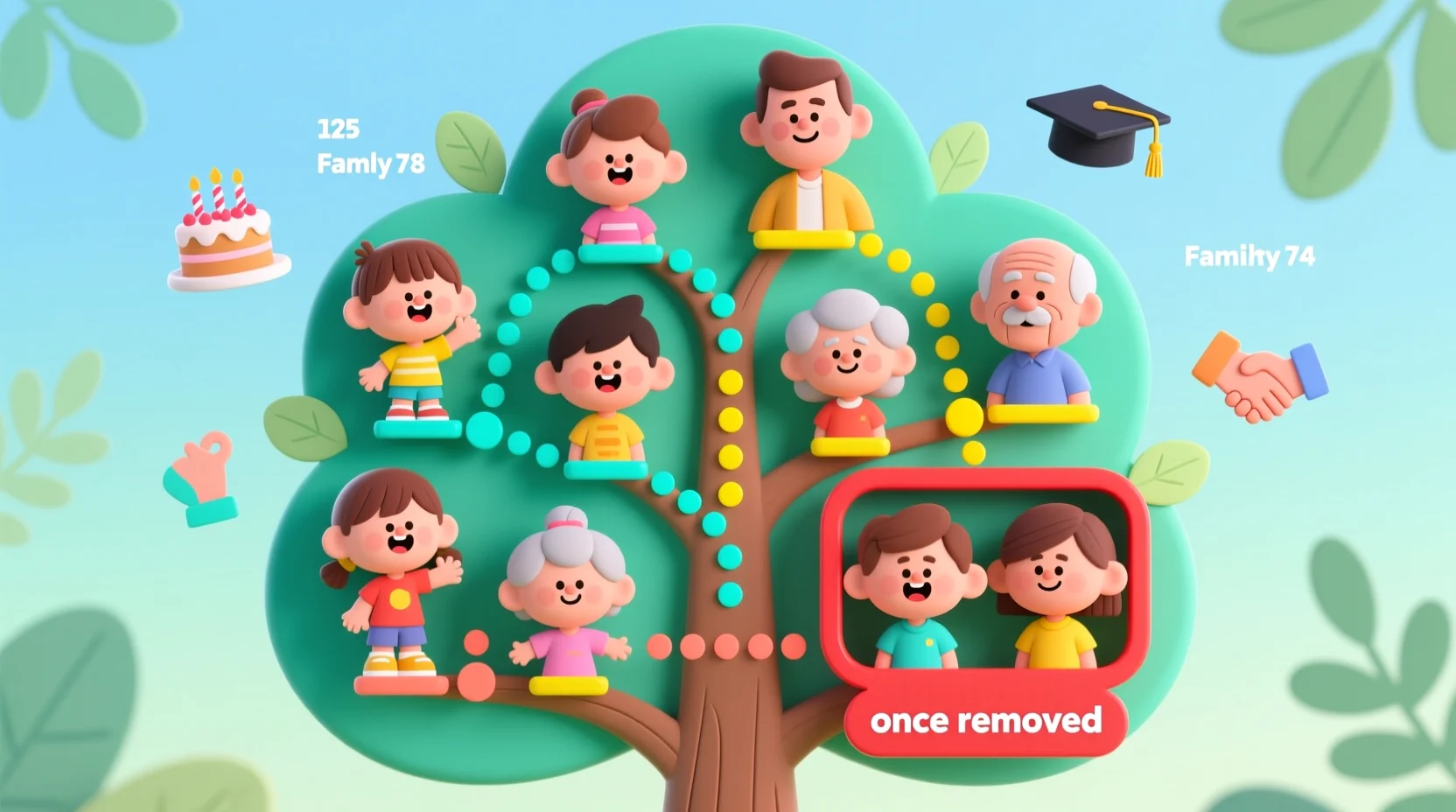
Have you ever been at a family reunion and someone casually said, “She’s my cousin once removed,” and you stared blankly, thinking: Wait, what does that even mean? 🤔 You’re not alone. Many people get confused by terms like once removed, second cousin, and first cousin twice removed.
Quick Answer:
A cousin once removed is someone who is either one generation older or younger than you but shares a common ancestor (usually a grandparent or great-grandparent). It’s family terminology used to explain relationships clearly across generations.
What Does “Cousin Once Removed” Mean?
In simple words, a cousin once removed is the child of your first cousin or the first cousin of your parent.
- If it’s your parent’s first cousin → they are your cousin once removed (one generation above you).
- If it’s your first cousin’s child → they are your cousin once removed (one generation below you).
Example:
“My dad’s cousin Sarah is my cousin once removed.”
“My cousin Jake has a daughter, and she is my cousin once removed.”
In short:
Cousin Once Removed = One Generation Difference + Shared Common Ancestor
Where Is “Cousin Once Removed” Commonly Used?
This phrase is used in:
- 👨👩👧👦 Family trees
- 📝 Genealogy research
- 🗂️ Family history documents
- 🏡 Discussions during family reunions
- 📚 Educational contexts about family relationships
Tone:
- ✔️ Formal or educational
- ✔️ Casual family conversations
- ❌ Not slang or internet humor
Examples of Cousin Once Removed in Conversation
A: “Who’s Emily at the reunion?”
B: “She’s my cousin once removed — my mom’s cousin’s daughter.”
A: “How is he related to you?”
B: “He’s my cousin once removed, my dad’s cousin.”
A: “Family trees are confusing 😭”
B: “Yeah, that’s why we have ‘once removed’ to track generations.”
A: “Is she my cousin?”
B: “Sort of — she’s your cousin once removed because she’s a generation above you.”
A: “So I’m cousins with my cousin’s kid?”
B: “Yep, technically they’re your cousin once removed.”
When to Use and When Not to Use “Cousin Once Removed”
✅ When to Use
- Explaining family relationships
- During genealogical research
- At family reunions
- In family history writing
❌ When NOT to Use
- Casual small talk with strangers (may confuse them)
- Joking about family without context
- When you don’t know exact relationships
Comparison Table: Cousin vs Cousin Once Removed
| Relationship | Who It Is | Generation Difference | Example |
|---|---|---|---|
| First Cousin | Child of your aunt/uncle | Same generation | Your aunt’s son is your first cousin |
| Cousin Once Removed | Child of your cousin OR your parent’s cousin | One generation above/below | Your first cousin’s daughter OR your parent’s cousin |
| Second Cousin | Child of your parent’s cousin | Same generation | Your parent’s cousin’s child |
| Second Cousin Once Removed | Child of your second cousin OR your parent’s second cousin | One generation difference | Your second cousin’s child |
Similar Terms or Related Family Words
| Term | Meaning | When to Use |
|---|---|---|
| First Cousin | Share grandparents | Everyday conversation |
| Second Cousin | Share great-grandparents | Family trees |
| First Cousin Twice Removed | Two generations difference | Genealogy research |
| Nephew/Niece | Child of sibling | Family discussion |
| Aunt/Uncle | Parent’s sibling | Explaining relatives |
| Grandparent | Parent’s parent | Family tree explanations |
FAQs
1. Is my cousin’s child my cousin?
Yes, but technically they are your cousin once removed, since they are one generation below you.
2. What about my parent’s cousin?
They are also your cousin once removed, one generation above you.
3. How do I know if someone is “once removed”?
If they are one generation older or younger than you, but you share a common ancestor, they are “once removed.”
4. Are cousins once removed close family?
Yes, though the relationship spans generations. Some families are close, others not.
5. Does “once removed” mean distant cousin?
Not exactly. It only describes the generational difference, not how close you feel.
6. Is a cousin twice removed different?
Yes — “twice removed” indicates two generations difference.
7. Why do genealogists use “removed”?
To clarify generational differences and avoid confusion in family trees.
Conclusion
A cousin once removed might sound complicated, but it’s actually simple: it’s a cousin from a generation above or below you. Understanding terms like this helps make sense of family trees, reunions, and genealogy research. Whether you’re writing your family history or just chatting at a reunion, now you can confidently explain who is a cousin once removed — and why that “removed” part matters.