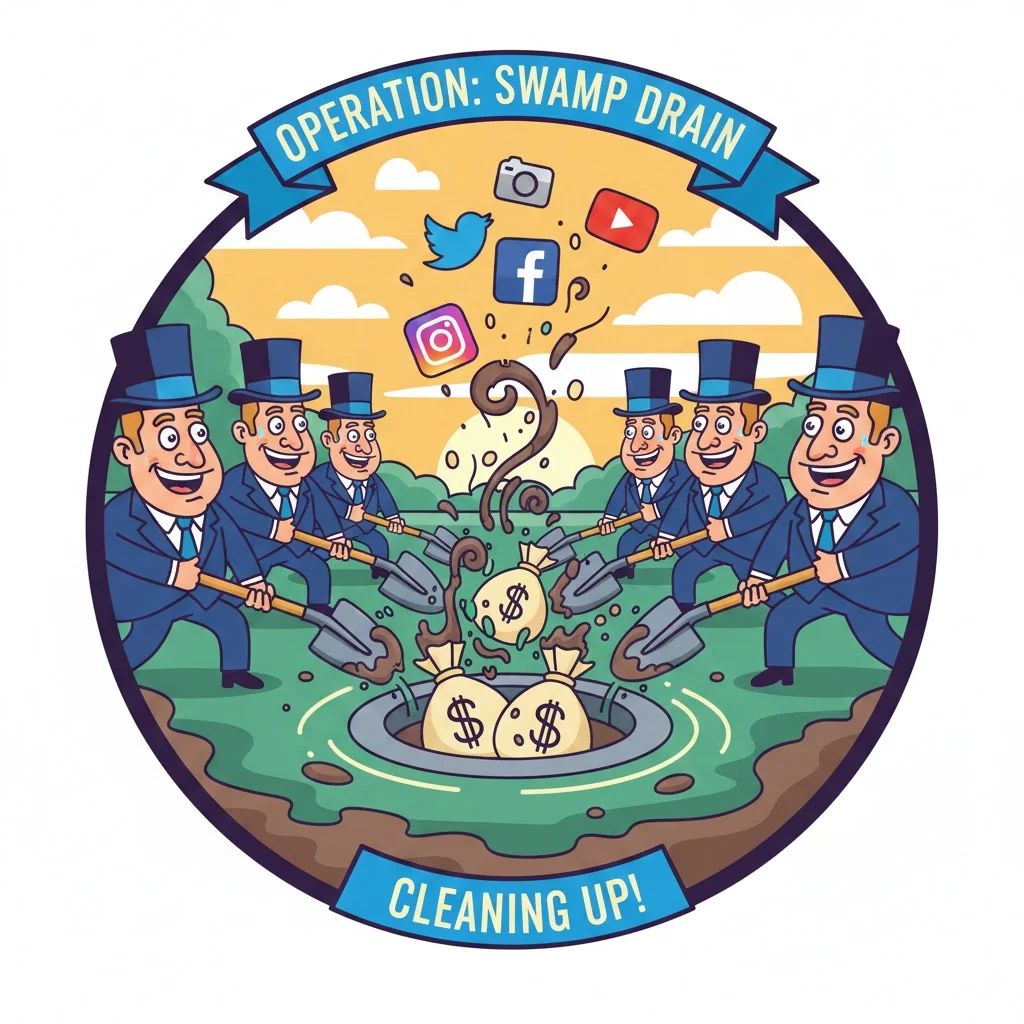
If you’ve ever watched political debates, news, or social media commentary, you’ve probably heard the phrase “drain the swamp”. At first glance, it might sound like someone is talking about cleaning wetlands or fixing nature. But in reality, it’s a metaphor that has become popular in politics and everyday discussions about corruption, bureaucracy, and power.
People often use it during election campaigns, online debates, or casual conversations to express the idea of removing inefficiency or corruption from a system. Understanding its meaning helps you follow political discourse without confusion.
Quick Answer:
“Drain the swamp” means to eliminate corruption, inefficiency, or entrenched power structures. It is a political and metaphorical phrase used for emphasis, persuasion, or critique.
What Does “Drain the Swamp” Mean?
The phrase “drain the swamp” is a metaphor originating from the idea of literally draining a swamp to remove stagnant, unhealthy water. Politically, it symbolizes clearing out corruption, nepotism, or bureaucratic inefficiency.
In essence, it is used to communicate that a system — government, organization, or institution — is “dirty” or “stagnant” and needs to be reformed or cleaned up.
Example sentence:
“The candidate promised to drain the swamp and remove corrupt politicians from office.”
In short:
Drain the Swamp = Remove corruption = Reform inefficient systems
Where Is “Drain the Swamp” Commonly Used?
This phrase has been popularized in:
- 📰 Political speeches
- 📺 News media
- 🗣️ Debates and commentary
- 🖥️ Social media posts and memes
- 📚 Opinion articles and blogs
- 💬 Everyday conversations discussing reform or inefficiency
Tone:
- ✔️ Political
- ✔️ Persuasive or motivational
- ❌ Not casual slang
- ❌ Not humorous (unless used sarcastically)
Examples of “Drain the Swamp” in Conversation
A: “Did you see the speech last night?”
B: “Yeah, they kept repeating ‘drain the swamp’ like it’s magic 😅”
A: “What’s his main campaign promise?”
B: “He wants to drain the swamp in government agencies.”
A: “I feel like nothing ever changes at work.”
B: “Exactly! We need someone to drain the swamp in our office.”
A: “Social media is full of scandals lately.”
B: “Time to drain the swamp and hold people accountable.”
A: “Is this phrase new?”
B: “Not really, it’s been used for decades in political rhetoric.”
When to Use and When Not to Use “Drain the Swamp”
✅ When to Use
- Discussing politics or government reforms
- Talking about bureaucracy or corporate inefficiency
- Debates on public accountability
- Opinion writing or commentary
❌ When NOT to Use
- Casual text with friends (unless joking or political)
- Professional emails without context
- Non-political discussions
- Confusing literal meaning (don’t use literally for cleaning swamps!)
Context Comparison Table
| Context | Example Phrase | Why It Works / Doesn’t |
|---|---|---|
| Political Speech | “It’s time to drain the swamp and restore integrity.” | Persuasive and political |
| News Article | “Officials are promising to drain the swamp in local government.” | Informative and clear |
| Casual Chat | “We should drain the swamp at work 😂” | Works as a joke, informal |
| Academic Paper | — | Too colloquial without proper context |
Similar Phrases or Alternatives
| Phrase | Meaning | When to Use |
|---|---|---|
| Clean house | Remove unwanted people or inefficiency | Business or informal politics |
| Reform | Make systematic changes | Academic, professional, political |
| Root out corruption | Eliminate unethical practices | Politics, journalism |
| Shake things up | Introduce major changes | Informal, casual context |
| Fix the system | Repair inefficiency | Neutral, professional |
| Cut bureaucracy | Reduce red tape | Government or organizational context |
FAQs
1. Is “drain the swamp” literal?
No. It is a metaphor for removing corruption or inefficiency.
2. Who popularized this phrase?
It has been used by multiple politicians over decades, but most recently became widely known in U.S. political campaigns.
3. Can it be used in non-political contexts?
Yes, for workplaces, organizations, or social systems to describe reform or cleanup.
4. Is it formal or casual?
It is semi-formal; suitable for speeches, articles, and professional commentary, but not casual texting (unless joking).
5. Does it have a positive or negative meaning?
Generally positive (cleaning corruption), but can carry a sarcastic or critical tone depending on context.
6. Can it be used humorously?
Yes, often in memes or social media posts for satire or exaggeration.
7. Is it appropriate in journalism?
Yes, when discussing political promises, reforms, or accountability.
Conclusion
“Drain the swamp” is more than just a catchy political phrase. It represents the idea of removing corruption, inefficiency, and entrenched power structures from governments, organizations, or systems. Whether you hear it in a speech, read it in an article, or see it as a trending hashtag, knowing its meaning allows you to understand political messaging and social commentary. Use it carefully: it is metaphorical, persuasive, and often carries a political charge, so context matters.