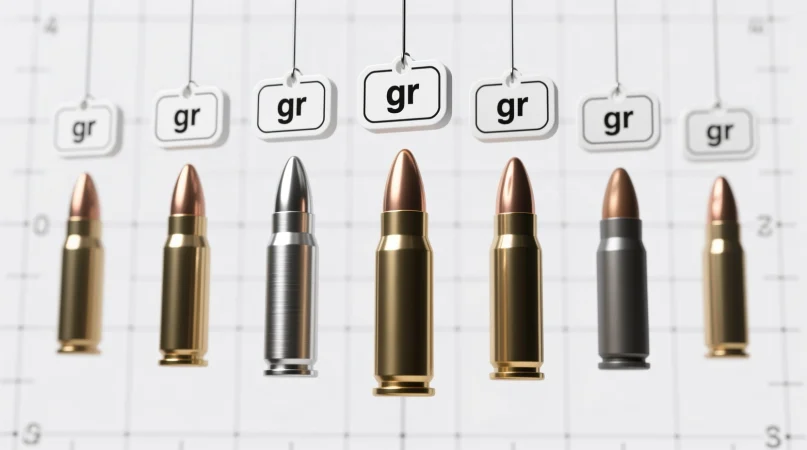
If you’ve ever bought ammunition online or walked through a gun shop, you’ve probably noticed a number next to every bullet — something like 115 gr, 147 gr, or 55 gr. The first time I saw it, I assumed it was some complicated engineering code. But it’s actually one of the most important things to understand when choosing ammo.
Quick Answer:
In ammunition, “grain” (gr) is a unit of measurement that tells you the bullet’s weight. A higher grain means a heavier bullet, while a lower grain means a lighter one.
What Does “Grain” Mean in Ammo?
In ammo terminology, grain (gr) is a measurement of bullet weight.
1 grain = 1/7000 of a pound.
Manufacturers use grains to describe the projectile (bullet) portion of the cartridge — not the entire round.
Heavy and light bullets behave differently:
- Lighter grains (ex: 115 gr) = faster speed, less recoil
- Heavier grains (ex: 147 gr) = more impact, deeper penetration
Example:
“Try the 115 gr ammo for less recoil, or 147 gr if you want something heavier.”
In short:
Grain = Bullet Weight = Impacts Speed, Recoil & Power
Where Is “Grain” Used in Ammunition?
You’ll find grain listed anywhere ammunition is described, including:
- 🔫 Ammunition boxes & packaging
- 🛒 Online gun stores
- 🎯 Shooting range recommendations
- 📚 Ballistics charts
- ⭐ Reviews from gun owners & hunters
Bullet grain is a standard measurement in all firearm platforms, including:
- Handguns
- Rifles
- Shotguns (slugs only)
- Self-defense rounds
- Hunting loads
It is technical, practical, and 100% necessary for choosing the right ammo for your purpose.
Examples of “Grain” in Real Ammo Conversations
A: “What 9mm ammo you running?”
B: “115 gr, shoots smoother.”
A: “Why does 147 gr feel heavier?”
B: “Cuz the bullet itself is literally heavier.”
A: “Is 55 gr good for AR-15?”
B: “Yep, classic lightweight option.”
A: “What grain should I use for home defense?”
B: “Most people pick 124 or 147 gr.”
A: “Is grain about the powder?”
B: “Nope, just bullet weight.”
A: “Why is 150 gr more expensive?”
B: “Heavier bullets = more material.”
When to Use Lighter vs. Heavier Grain Ammunition
Lighter Grain (ex: 55 gr, 115 gr)
Use when you want:
- Faster bullet velocity
- Flatter trajectory
- Lower recoil
- Plinking / range shooting
- Better accuracy at close-medium distance
Heavier Grain (ex: 124 gr, 147 gr, 150 gr, 180 gr)
Use when you need:
- More stopping power
- Better penetration
- Hunting performance
- Subsonic use (especially 147 gr in 9mm)
- Longer-distance stability
Comparison Table
| Context | Example Ammo | Why It Works |
|---|---|---|
| Range Shooting | 115 gr 9mm | Light, fast, low recoil |
| Home Defense | 124–147 gr 9mm | Balanced weight + better impact |
| AR-15 Target | 55 gr .223/5.56 | Classic lightweight, stable |
| Hunting | 150–180 gr .308 | Heavy grain for deep penetration |
| Suppressed Shooting | 147 gr 9mm | Subsonic, quieter performance |
Similar Ammunition Terms You Should Know
| Term | Meaning | When It Matters |
|---|---|---|
| FPS | Feet per second (bullet speed) | Speed comparison |
| Caliber | Bullet diameter (ex: 9mm, .45) | Firearm compatibility |
| Ballistics | Bullet performance in flight | Accuracy & drop |
| Jacket (FMJ/HP) | Bullet casing type | Penetration vs. expansion |
| Subsonic | Bullet travels < speed of sound | Suppressed firearms |
| Grain | Bullet weight | Recoil, speed & impact |
FAQs
1. Does more grain mean more power?
Usually yes — heavier bullets hit harder but move slower.
2. Does grain affect recoil?
Yes. Heavier grain = slightly more recoil.
3. Is grain the weight of the whole bullet or the entire round?
It’s the weight of the bullet only, not the casing or powder.
4. Is higher grain better for self-defense?
Many shooters prefer 124–147 gr for better stopping power.
5. Does grain change accuracy?
Depending on your firearm, certain grains may shoot tighter groups.
6. What grain is best for 9mm?
115, 124, and 147 gr are all common — the “best” depends on purpose.
7. What grain is best for AR-15 (.223/5.56)?
55 gr is most common, while 62 gr and above are common for accuracy or specific loads.
Conclusion
Understanding grain in ammunition is essential for choosing the right load for shooting, self-defense, or hunting. Grain simply measures bullet weight, but that weight influences important factors like recoil, velocity, power, and performance. Whether you prefer fast lightweight rounds or heavy-impact bullets, knowing how grain works helps you shoot smarter, safer, and more accurately. The next time you shop for ammo, you’ll know exactly what those numbers mean — and which one fits your needs.