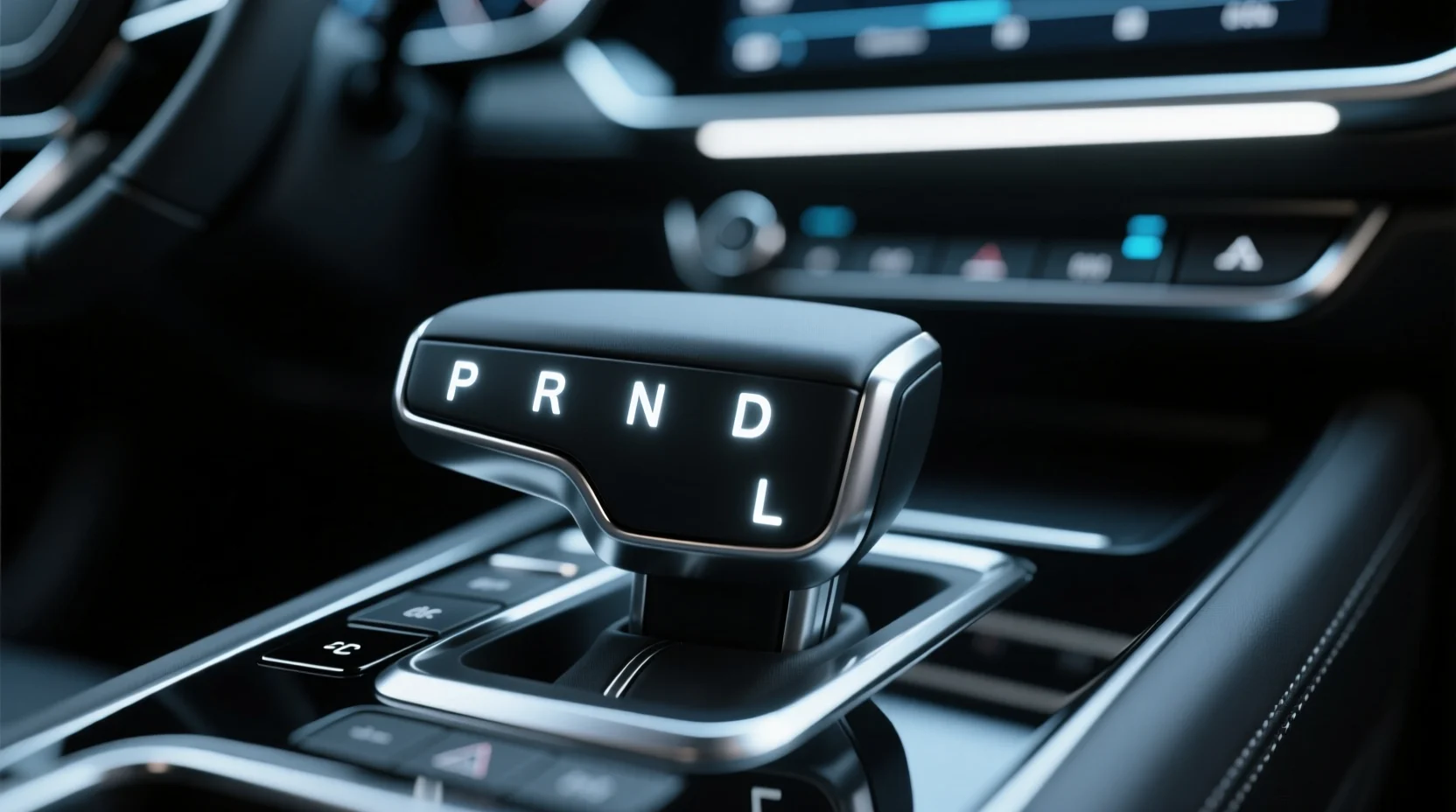
If you’ve ever sat in a car, stared at the gear shift, and wondered why there’s a big letter L sitting next to P, R, N, and D… you’re not alone. I still remember the first time I saw it while borrowing a friend’s car. I thought it stood for “Left,” “Limited,” or maybe even “Lol, good luck driving this.” 😭 But no — the meaning of L on a gear shift is much simpler, and far more useful.
Quick Answer:
On a gear shift, “L” means “Low Gear.” It’s a driving mode that gives your car more power and control at low speeds, especially on steep hills, slippery roads, or when towing heavy loads.
What Does “L” Mean on a Gear Shift?
The “L” on an automatic transmission stands for Low Gear.
Instead of allowing the car to shift into higher gears, it locks the transmission into a lower gear, giving:
- High engine power
- Strong torque
- Better control
- Slower speed
This mode is extremely helpful when you need stability rather than speed.
Example:
“I switched to L while driving downhill so the car would slow itself without burning the brakes.”
In short:
L = Low Gear = More Power + More Control + Low Speed
Where Is “L” Used While Driving?
The L gear isn’t for everyday highway driving. It’s specialized for certain situations where normal “D” (Drive) isn’t enough.
Here’s where drivers commonly use it:
- 🏔️ Driving Down Steep Hills
Helps control speed using engine braking, reducing pressure on your brakes. - 🧗 Driving Up Steep Slopes
Makes it easier for the car to climb without struggling. - 🌧️ Slippery Roads (Rain, Snow, Mud)
Prevents the wheels from spinning too fast. - 🚚 Towing Trailers or Heavy Loads
Gives more torque to pull weight safely. - 🚦 Slow, Controlled Driving
Great for off-road trails, parking lots, or tight maneuvering.
L gear is not for regular everyday driving. It’s a special mode for special situations.
Examples of “L Gear” Conversation Usage
A: “bro why my friend’s car got an L on the shifter??”
B: “it’s low gear 😭 for hills and stuff”
A: “my brakes were burning on that downhill”
B: “bro use L so the engine slows for u 💀”
A: “my car struggles on steep streets”
B: “put it in L, it climbs easier”
A: “is L like sport mode?”
B: “nahh opposite. low speed, high power 😭”
A: “i’m towing a trailer tomorrow”
B: “use L so your engine gets more torque”
When to Use and When Not to Use L Gear
✅ When to Use L
- Going downhill (engine braking)
- Climbing steep roads
- Driving through snow, mud, or sand
- Towing something heavy
- Off-roading
- Driving slowly in tight spaces
❌ When NOT to Use L
- On highways
- During regular city driving
- At high speeds
- When engine sounds strained
- When you’re low on fuel (L consumes more fuel)
Context Comparison Table
| Situation | Example | Why It Works |
|---|---|---|
| Downhill | “I switched to L to control the speed.” | Uses engine braking, prevents overheating brakes |
| Uphill | “Going up this hill? Use L.” | Gives more torque and power |
| Towing | “Put it in L before pulling the trailer.” | Keeps vehicle stable with extra weight |
| Normal Driving | “Just keep it in D.” | Smooth, fuel-efficient, safe |
| Highway | “Never use L at 100 km/h.” | Low gear at high speed damages engine |
Similar Driving Terms or Alternatives
| Term | Meaning | When to Use |
|---|---|---|
| D (Drive) | Normal automatic driving | Everyday driving |
| R (Reverse) | Backward movement | Parking, backing up |
| N (Neutral) | Disengages engine from wheels | Car wash, towing |
| S (Sport Mode) | Faster acceleration, higher RPM | Racing, highway merging |
| 1 / 2 Gear | Manual low gears | Older cars or manual control |
| B Mode | Battery regenerative braking | Hybrid/electric cars going downhill |
FAQs
1. Is it bad to drive in L gear all the time?
Yes. It wastes fuel and strains the engine because the car stays in a low gear.
2. Can I switch to L while driving?
Yes — as long as you are moving slowly. It should not be used at high speed.
3. Does L make the car go faster?
No. It makes the car go slower but with more power.
4. Is L the same as first gear?
In many cars, yes. It limits the car to the lowest gears.
5. Can I use L in rain?
Yes. It helps maintain control on slippery surfaces.
6. What happens if I accidentally use L on the highway?
Your engine will rev very high. Shift back to D immediately.
7. Does L gear save brakes?
Yes — especially when going downhill because it uses engine braking.
Conclusion
The “L” on your gear shift isn’t some mysterious button — it’s one of the most useful features for safe driving in difficult conditions. Whether you’re going down a steep hill, driving in snow, or towing something heavy, Low Gear gives your car the torque and control it needs. Knowing when to use it can protect your brakes, improve traction, and make driving safer overall. Use it wisely, only in slow and controlled situations.