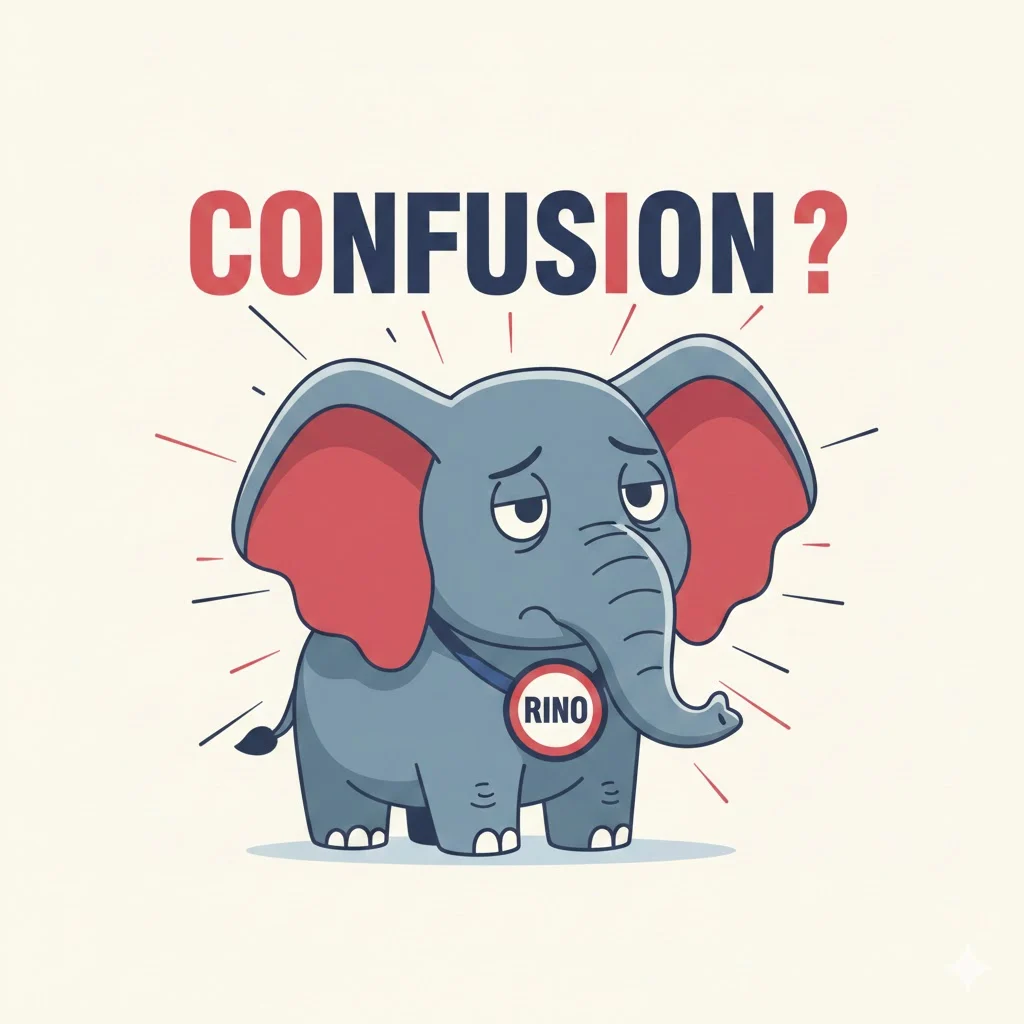
If you’ve been on political TikTok, X (Twitter), or heated Reddit threads lately, you’ve probably seen someone call a politician a “RINO.” The first time I saw it, I genuinely thought people were roasting someone for looking like a rhinoceros. 🦏🤣 Spoiler alert: it has nothing to do with animals — but everything to do with political drama, debates, and online arguments.
If the term confused you too, don’t worry. Let’s break it down clearly and simply.
Quick Answer:
“RINO” stands for “Republican In Name Only.” It’s a political insult used to claim someone pretends to be Republican but doesn’t act like one.
What Does “RINO” Mean in Text?
“RINO” is an acronym used in U.S. political conversations. It means “Republican In Name Only.” People use it to say a politician or public figure claims to be Republican but doesn’t follow “true” Republican beliefs or behavior.
It’s often used in arguments, debates, and social media fights to call someone fake or disloyal.
Example Sentence:
“He voted against the bill again… total RINO move 😒”
In short:
RINO = Republican In Name Only = Someone seen as a fake or weak Republican.
Where Is “RINO” Commonly Used?
You’ll see “RINO” most often in:
- 🧵 Twitter/X political debates
- 🎥 TikTok political commentary
- 💬 YouTube political reactions
- 📰 News comment sections
- 📱 Private political discussions
- 🗳️ Election arguments
Tone:
It’s not casual, not friendly, and definitely not neutral.
It’s a political insult and should be used carefully.
Examples of “RINO” in Conversation
Example 1
“Did you see his vote today?” asked A.
B: “Yes, buddy, he’s a complete RINO 💀.”
Example 2 A: “OMG, they’re calling her a rino again.”
B: “Internet politics is laughable 😭”
Example 3 A: “He swiftly switched sides.”
B: “classic rino behavior 😒”
Example 4 A: “Why is everyone upset with him?”
B: “They think he’s a RINO, haha.”
Example 5
A: “Is rino considered an insult?”
B: “It’s political beef, really.”
When to Use and When Not to Use “RINO”
✅ When to Use
- During political discussions
- When describing policy disagreements
- In opinion-based debates
- When talking about party loyalty
❌ When NOT to Use
- With people who avoid politics
- In professional settings
- In academic or formal writing
- With strangers online — it can start unnecessary conflict
Context Comparison Table
| Context | Example Phrase | Why It Works |
|---|---|---|
| Political Chat | “dude he’s acting like a total rino 😭” | Informal, opinion-based |
| Work Chat | “I disagree with his approach to the policy.” | Professional & objective |
| “Here are my thoughts on the proposal.” | Neutral and appropriate | |
| Social Media | “rino energy lmao” | Casual but risky |
Similar Slang Words or Alternatives
| Slang | Meaning | When to Use |
|---|---|---|
| “Flip-flopper” | Someone who changes positions | Campaign debates |
| “Left-leaning” | Slightly liberal views | Neutral description |
| “Moderate” | Centrist political stance | Polite conversations |
| “Fake conservative” | Someone acting against conservative views | Informal debates |
| “Soft right” | Mild Republican views | Calm political talk |
| “Establishment” | Traditional party members | Political analysis |
FAQs
1. Is “RINO” an insult?
Yes. It’s used to criticize someone for not being a “real” Republican.
2. Is “RINO” only used in the U.S.?
Mostly, yes. It’s tied to American politics.
3. Can “RINO” be used as a joke?
Sometimes, but the tone is usually serious or mocking.
4. Does “RINO” mean someone switched political sides?
Not always. It can simply mean someone disagreed with their party.
5. Is calling someone a RINO rude?
Yes — it can escalate arguments quickly.
6. Is it used by both political parties?
Primarily by conservative voters criticizing other conservatives.
7. Does it relate to actual rhinos?
No — the animal similarity is just coincidence.
Conclusion
“RINO” is a powerful and often controversial political slang term that’s become extremely common in online debates. While it may look funny or random, its meaning is very direct: it questions someone’s political identity and loyalty. If you decide to use it, do so carefully — political slang can escalate discussions fast. Understanding what it really means helps you navigate conversations without accidentally offending or misunderstanding someone.